
The Rock Academy Earns Coveted AP Platinum Honor Roll from the College Board
Our school earned the prestigious AP Platinum Recognition by the College Board. This is an elite distinction that places us among a very select group of high schools nationwide 4 the TOP 7%. This achievement is a direct reflection of the incredible hard work, intellectual curiosity, and unwavering dedication of our students, as well as the efforts of our faculty and staff who empower students to reach their fullest potential in Advanced Placement studies. The AP Platinum Recognition signifies a robust commitment to academic rigor and a proven track record of student success in Advanced Placement courses and exams. It acknowledges schools that not only offer a broad range of AP subjects, but also demonstrate high levels of student participation and outstanding performance on college-level assessments. This distinction illustrates our commitment to our mission to build Deep Thinkers who are prepared for college and life. We remain committed to expanding opportunities for Advanced Placement learning and continuing to foster a learning environment where every student is encouraged to achieve their personal best.
6 Rock Academy Students Earn College Board National Recognition Honors!
The College Board National Recognition Program is a prestigious honor awarded to high-performing students across the nation. It celebrates students who demonstrate exceptional academic achievement within the context of their school and community. These honors help students stand out to colleges and universities across the country.
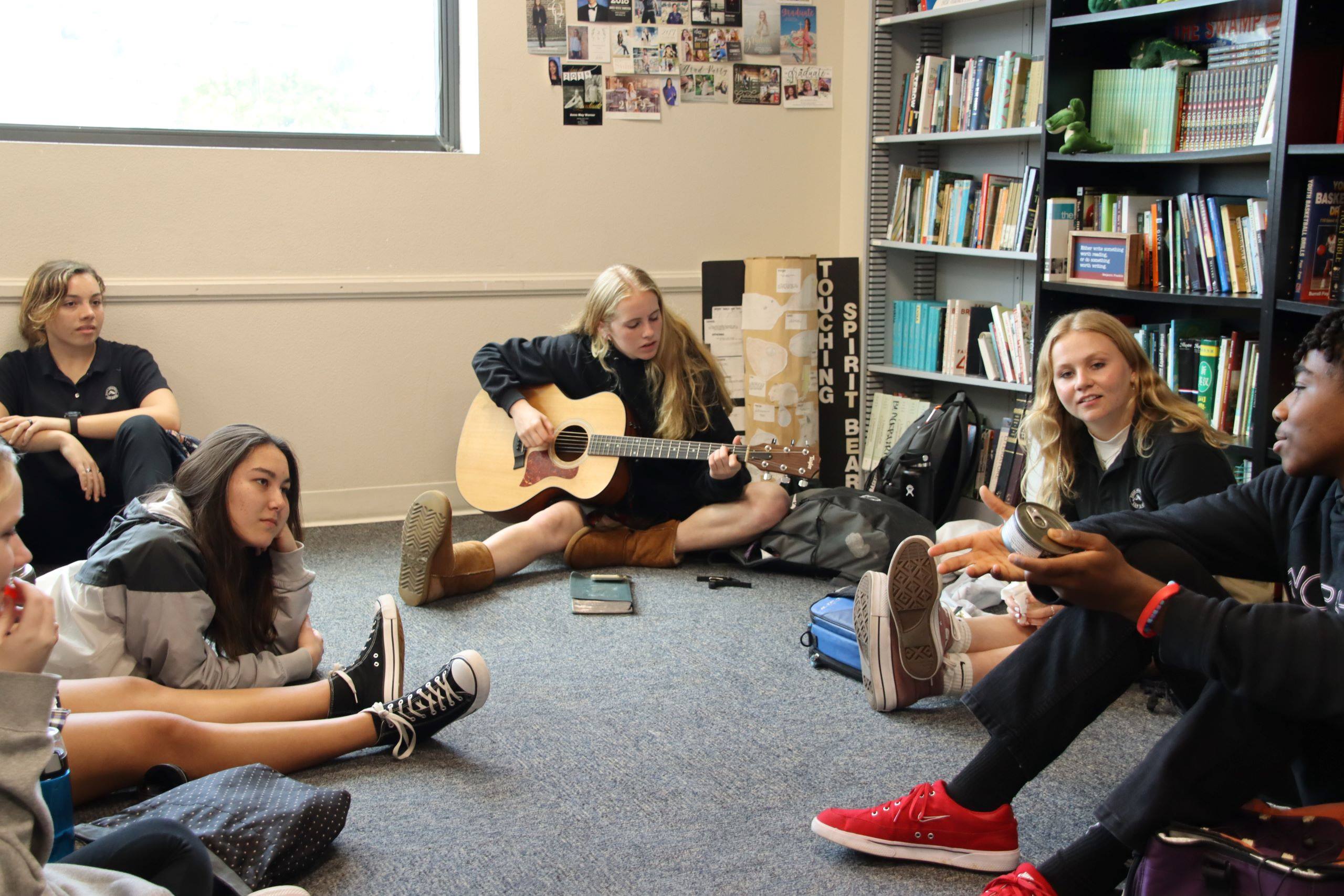
We provide students with rigorous academics in a spiritually enriching community.
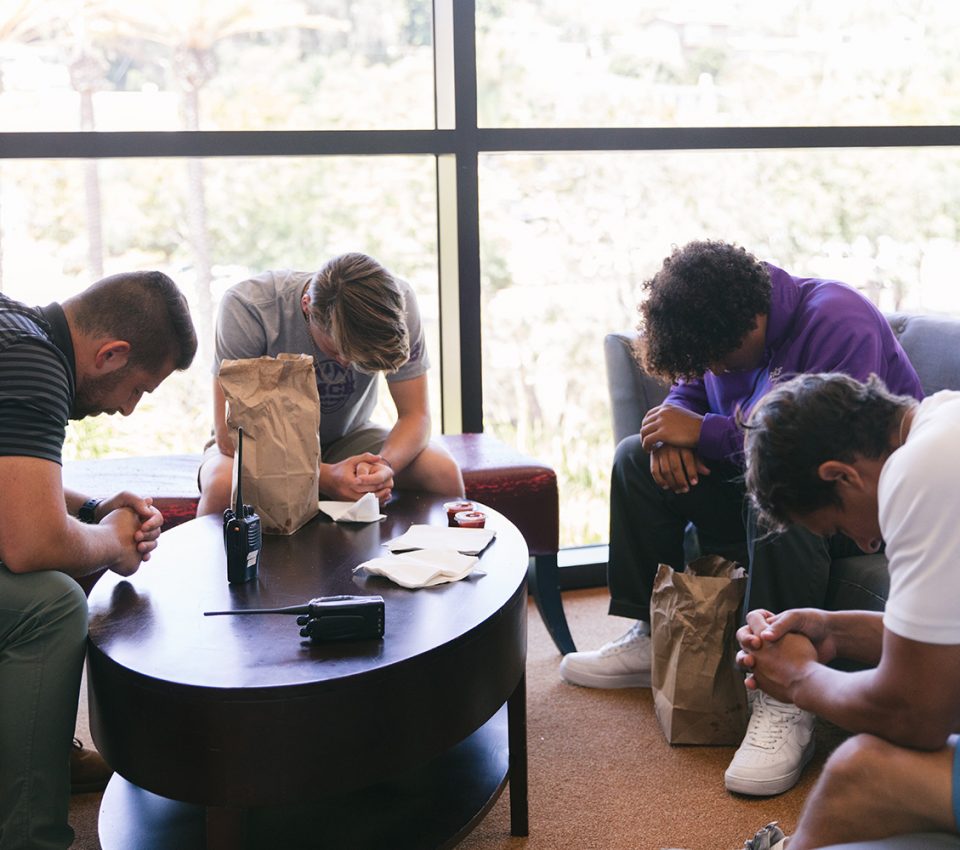
At the Rock Academy High School, we combine challenging academics with a faith-focused, intentional community to develop students who not only succeed but who do so with purpose, compassion, and love for others. Students learn that God has uniquely gifted each one of them and that when they use their gifts to glorify Him, they are able to make a difference in this world for good.
An inspirational learning approach.
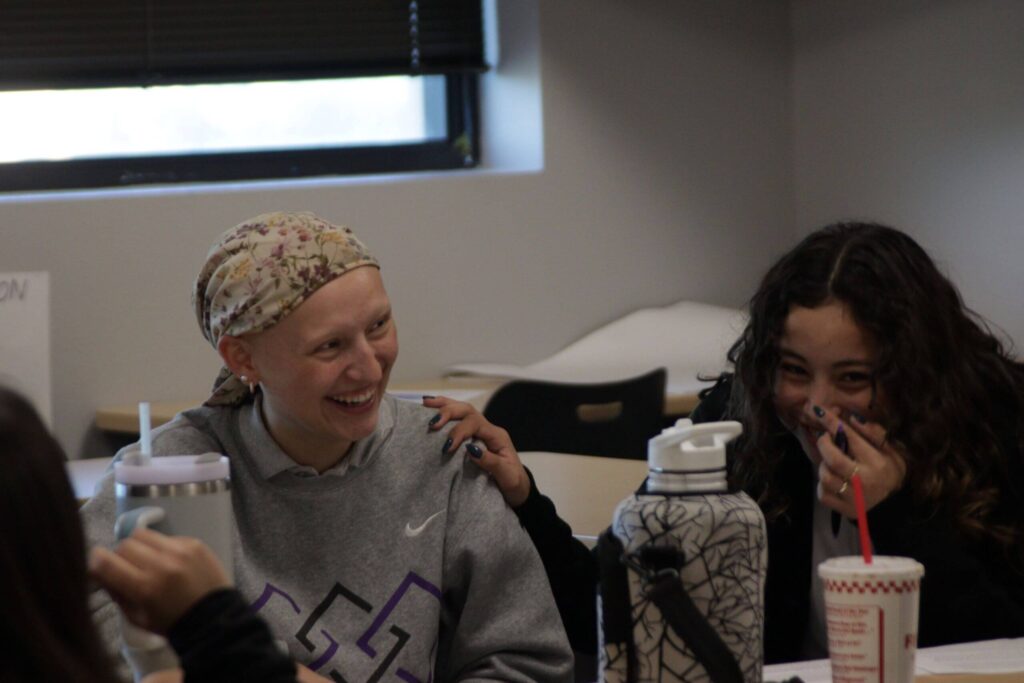
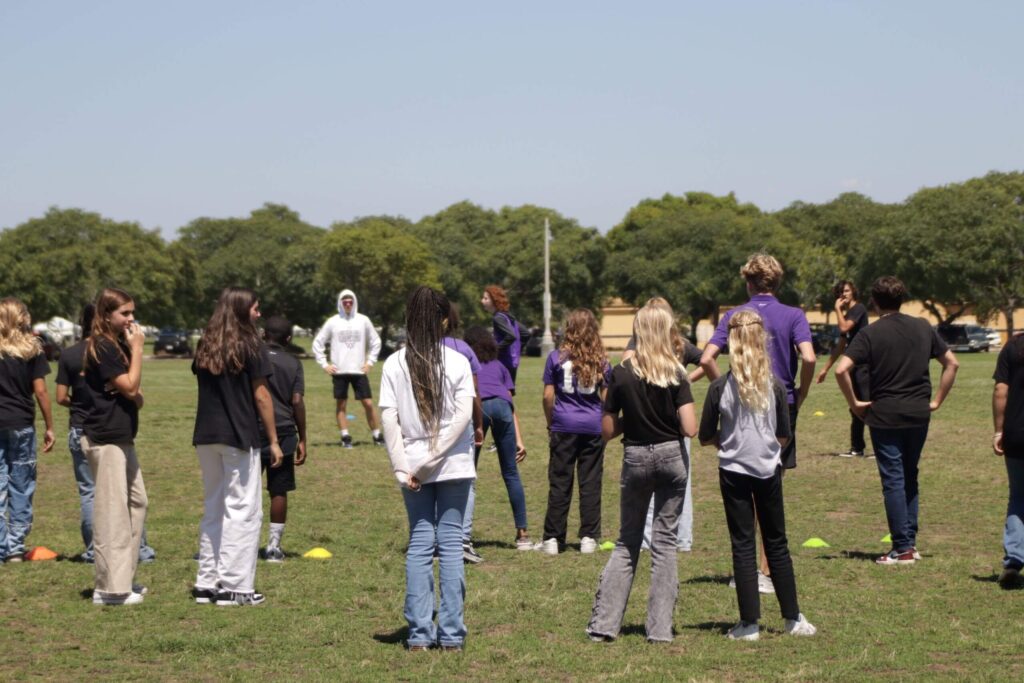
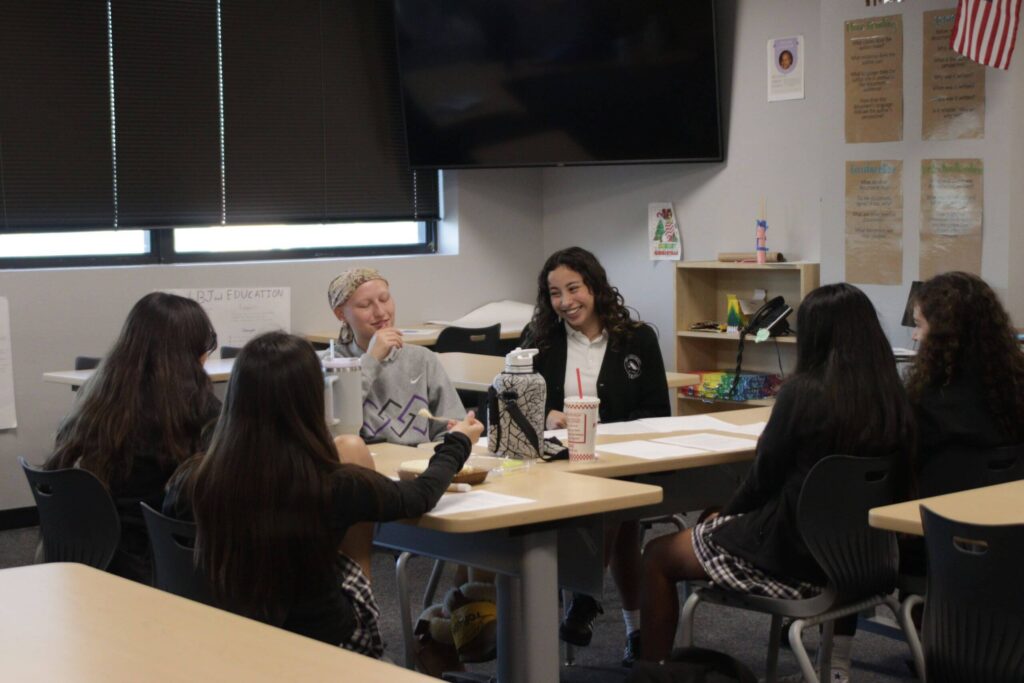
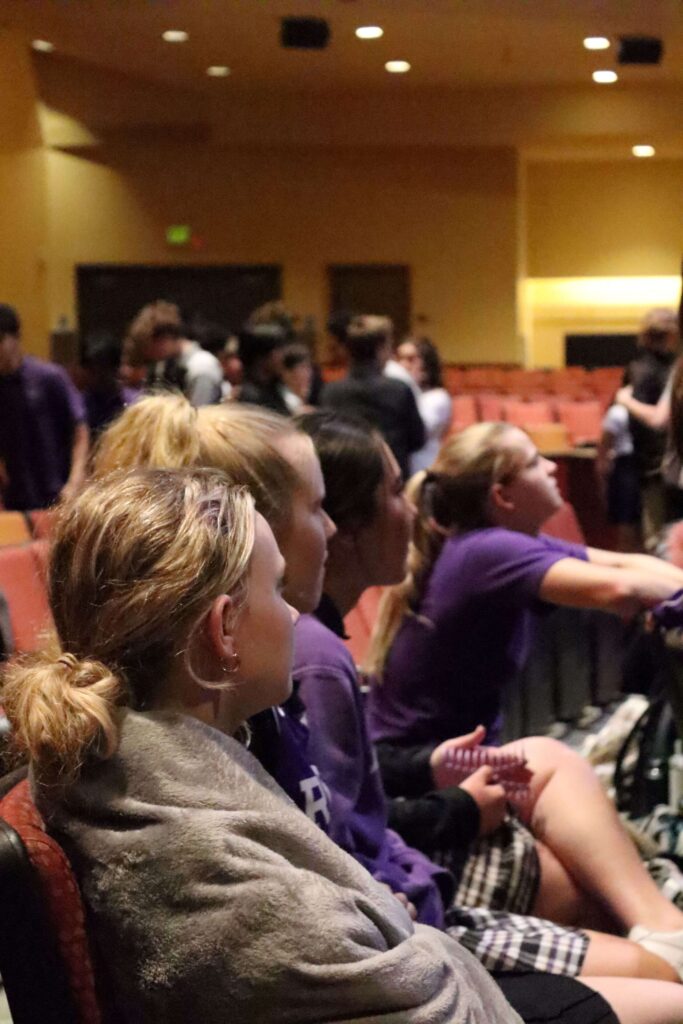
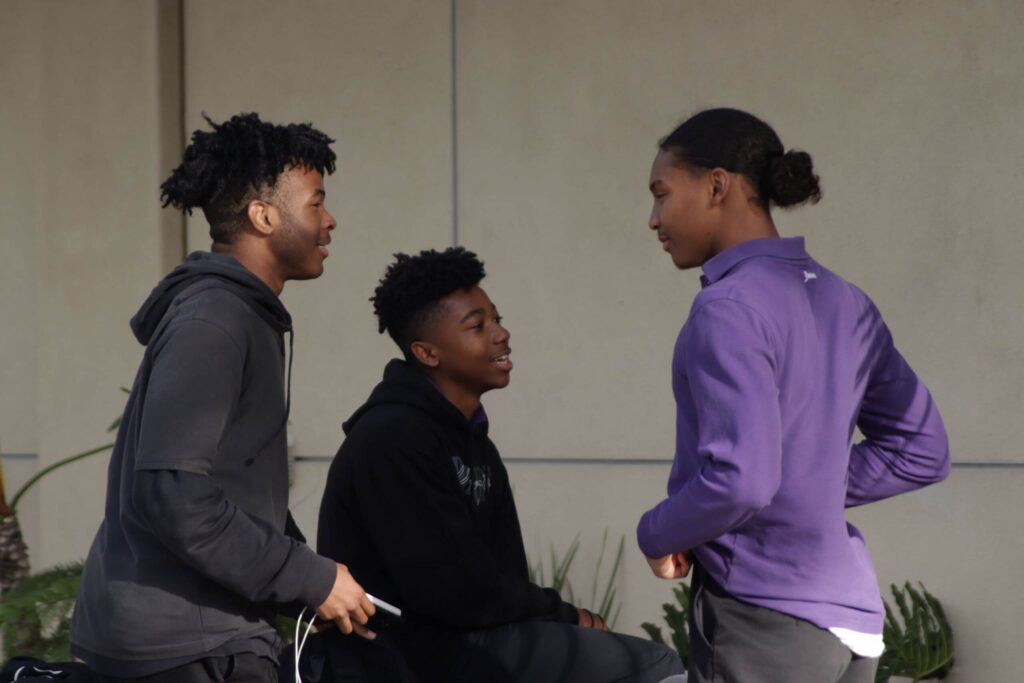
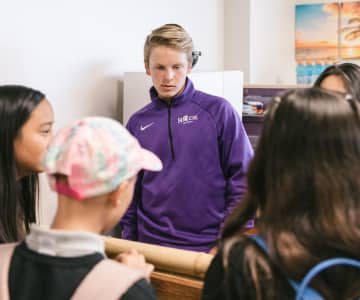
Our teachers are dedicated to making learning meaningful and relevant. We use various teaching strategies to draw connections across the curriculum in order to deepen our students’ understanding of the bigger picture. For example, a hands-on Calculus project will encompass mathematics, programming, design, engineering, art, writing, research in the industry, and oral presentations. We believe curiosity leads to intellectual achievement and we teach our students to ask big questions about the world around them.




Equipping students for college.
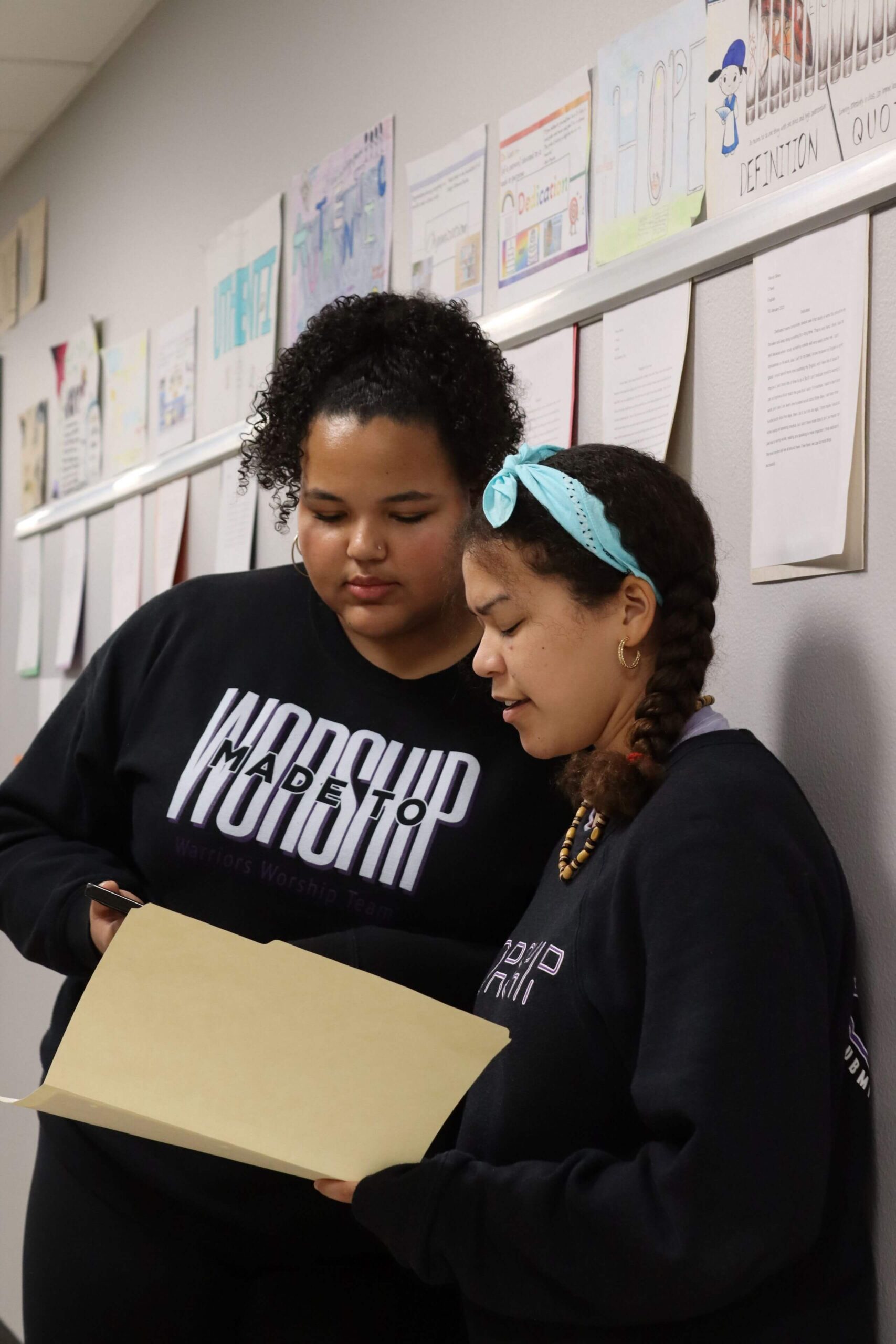
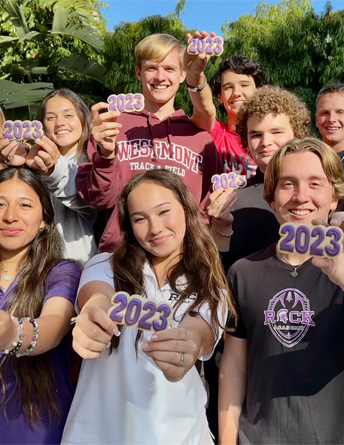
Students begin building a comprehensive, competitive, and compelling college portfolio starting day one of our High School. The Rock Academy’s course options are designed to ensure every student is accepted to the college of their choice. Senior students culminate their high school experience with a capstone project that highlights their years of achievement. We are fully accredited by the Western Association of Schools and Colleges and our courses meet the University of California A-G course requirements.

Shaping bold, confident, and compassionate leaders.
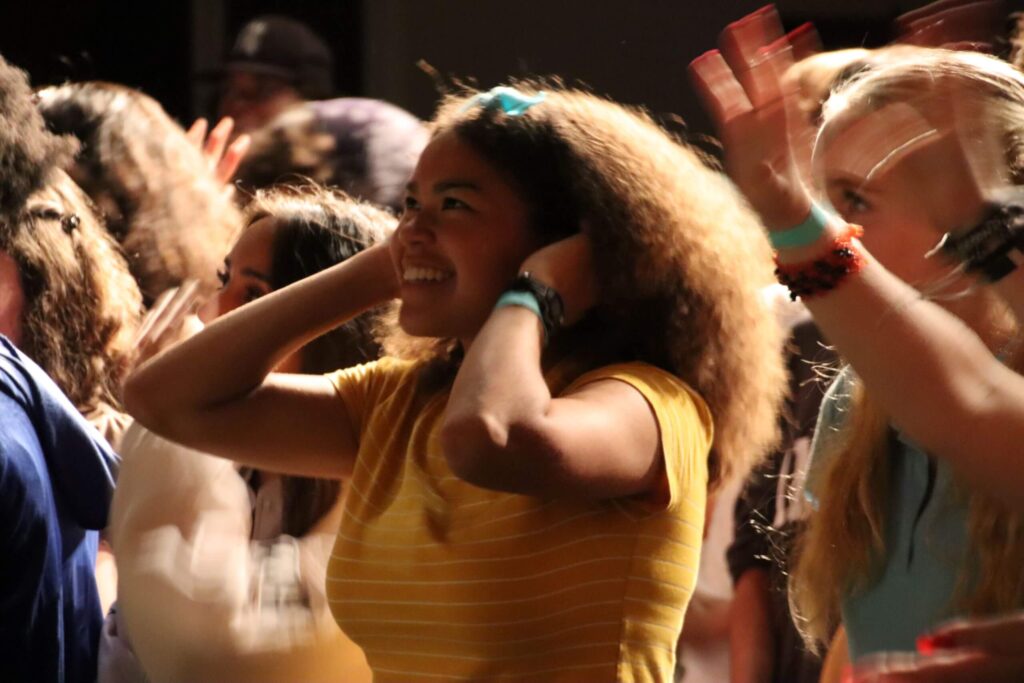
In their final years at the Rock Academy, our High School students deepen their intellectual knowledge which is firmly planted on a solid foundation of faith. They graduate with a secure understanding of their strengths and passions. With a fervor to live out their calling, and the confidence to step into positions of leadership, they go on to have significant impact in the world as they strive to make it a better place.
Curriculum
- Bible
- English
- Math
- Science
- History/Social Studies
- World Languages
- Physical Education
- Visual and Performing Arts
- Associated Student Body
- Educational Support Program
Bible
Christian Ethics (9)
Christian Ethics (9) is a study on Christian Ethics. It is a study of how our faith informs how we practically live and how we should view some of the most difficult questions facing the youth today. We will spend most of the time looking at the Sermon on the Mount, while learning how to live out our faith in a challenging culture today.
Foundations of Faith II (9)
Foundations of Faith II (9) is designed to help students grasp the essentials of the Christian faith. This course covers how the Bible was written and why it’s considered divinely inspired, as well as how to read and understand it. Students will explore the historical periods of the Bible, the purpose of faith, the life of a Christian, worldviews, and moral issues. Additionally, the course addresses how to cultivate personal faith in today’s culture.
Bible Survey (10)
Bible Survey (10) takes students on a comprehensive study of the Bible Genesis to Revelation. This class will look at the Bible as a whole and understand themes, literature, and background for each book. Materials include the Bible project videos, Echo the Story Curriculum, and various other materials. Upon completion of this course, students will be able to explain the message of each book in the Bible.
Foundations of Faith III (11)
Foundations of Faith III (11) will study the essentials of our faith that crosses all denominations in creative and interactive ways. We will discuss Jesus, the Bible, the cross and resurrection, church, the Holy Spirit, as well as other essential topics of our faith. The second semester we will focus on the Gospels, especially the Sermon on the Mount.
Apologetics (12)
Apologetics (12) dives into the reasoning behind the Christian faith, defending truth and the logic of God, and exploring the history of Jesus and the Bible. Students will learn to articulate the Biblical worldview and gain an understanding of world religions and cults. Key materials include “Evidence That Demands a Verdict” and “What You Need to Know About Defending Your Faith.” The course features a variety of projects, discussions, and debates to engage students deeply.
English
English I and II (College Prep and Honors), English III, and English IV
English I and II (Honors and Traditional), English III, and English IV are discussion-based, student-focused survey courses that cover the basic styles of writing and genres of literature. Beyond academic comprehension, writing skills, and appreciation for literature, students will learn to think critically and effectively communicate their ideas and beliefs. Students will also grow in their understanding of who God is and who he has created them to be.
AP Language & Composition
Advanced Placement Language and Composition is a student-focused, discussion-based course in which students will study primarily non-fiction texts. The course is an introductory college-level composition course. Students cultivate their understanding of writing and rhetorical arguments through reading, analyzing, and writing texts as they explore topics like rhetorical situations, claims and evidence, reasoning and organization, and style. Beyond academic comprehension, writing skills, and appreciation for literature, students will learn to think critically and effectively communicate their ideas and beliefs. Students will also grow in their understanding of who God is and who he has created them to be.
AP Literature & Composition
Advanced Placement Literature and Composition is a student-focused, discussion-based course which covers major authors and works from antiquity to modern times that have shaped American culture. This course is an introductory college-level literary analysis course. Students cultivate their understanding of literature through reading and analyzing texts as they explore concepts like character, setting, structure, perspective, figurative language, and literary analysis in the context of literary works. Beyond academic comprehension, writing skills, and appreciation for literature, students will learn to think critically and effectively communicate their ideas and beliefs. Students will also grow in their understanding of who God is and who he has created them to be.
Math
Pre-Algebra
Pre-Algebra is a course to serve as a bridge between elementary mathematics and Algebra. This course builds a foundation of algebraic concepts through the use of technology, manipulatives, problem solving, and cooperative learning. Students will learn to utilize the graphing calculator in appropriate situations. Concepts include algebraic expressions, linear equations, polynomials, factoring, inequalities, geometry, statistics, and graphing. Reasoning, estimation, and connections between math and everyday applications will be emphasized throughout the Pre-Algebra course. This course is designed to prepare students for Algebra I.
Algebra I
Algebra I is a first-year course in Algebra that covers fundamental topics including the following: linear equations and inequalities, quadratic functions and their graphs, and linear systems of equations. The topic of word problems is also given extensive development to develop critical thinking and analytical skills. This course emphasizes on building a firm foundation for future math courses.
Geometry
Geometry is an introductory course that uses the properties of common geometric figures to build the more abstract concepts of logic and reasoning. Deductive reasoning skills are developed by using theorems and definitions to develop formal proofs. The topics covered are basic plane geometry such as points, lines, and planes as well as three dimensional geometry. Properties and relationships of parallel and perpendicular lines will be covered throughout the text to build deeper understanding of the properties of triangles and other polygons and build an understanding of congruence, similarity and proportions. These topics will provide the basis of an exploration of the special properties of right triangles and basic trigonometry. An interactive classroom environment that involves student led discussions and presentations foster a deeper understanding of subject matter and sharpen communication and collaboration skills. Outdoor explorations encourage students to connect the theoretical classroom work to the world around them to encourage deeper thinking about the topics in general and to contemplate the order and grandeur of the Lord’s Creation.
Algebra II
Algebra II is a third-year Algebra course, providing a more in-depth and complete study of the following topics previously introduced in Algebra I: linear equations, systems of linear equations and inequalities, quadratic relations, functions, powers, radicals and polynomial and rational functions. The unifying subjects for this course of advanced Algebra and Geometry are straight lines and the figures they produce. Students are also introduced to the following Pre-Calculus topics: exponential, logarithmic, and trigonometric functions.
Pre-Calculus
Pre-Calculus is intended to extend and deepen a student’s understanding of concepts previously covered in prerequisite algebra and geometry classes. It also serves as a general course in a variety of fundamental topics necessary for advancement into more specialized advanced mathematical courses such as calculus, statistics or discrete mathematics. Some of those topics of study include: mathematical relations, functions, their inverses and graphical representations in the Cartesian plane, working algebraically with functions in solving systems of equations, working with rational and polynomial functions of degree two and above, an introduction to complex numbers, as well as logarithmic and exponential functions. Trigonometry is studied in greater detail than in previous courses including the mastery of fundamental identities and algebraic solutions to equations involving trigonometric functions. The Honors level provides opportunities for deeper exploration of underlying concepts of each topic. This prepares students for AP Calculus.
As we take the time to study mathematics, we do so as a way to better understand the infinite mind of the Creator who made all things and made us in His image so that we might, as finite beings, be able to know Him through His revelation to us, whether that is through His general revelation in nature or through His Word breathed out in the Bible.
AP Calculus AB
AP Calculus is intended to give the student an introduction to the basic fundamentals of calculus and prepare the student to complete the AP Calculus AB Test. Three mathematical “Big Ideas” are brought together in this course, Limits and Continuity, Differential Calculus and Integral Calculus. These lay a foundation for greater exploration in the sciences which all depend on the tools available found in calculus. This is an exciting opportunity for students to connect processes all around them to mathematics and be challenged to think creatively about how new applications can be made. In so doing they will be delving into a deeper understanding of the beauty and wonder of the amazingly dynamic yet orderly character of God’s creation. It was after all, Newton’s need to better understand and compute the orbit of the moon around the earth that led to his development of calculus.
AP Statistics
AP Statistics is a beginning college-level course in the methods and practice of statistics. The fundamentals of collecting, representing and most importantly understanding what inferences may be drawn from collected data are an essential part of this course. Students will learn to collect data and to design experiments so that bias is minimized and that predetermined levels of confidence in the outcome may be realized. Computational tools such as statistical calculator functions, spreadsheets and Minitab are utilized for visualization and modeling. The course is designed around the College Board’s requirements for a class carrying the title of AP Statistics and is rigorous in preparing the students for that exam. By the end of the course, students will not only have mastery for the AP exam, they will each work on a final projects which will involve them in designing an experiment, implementing their plan and conducting confidence tests on their data and presenting thoughtful inferences and conclusions while defending their choice of methodology.
Science
Anatomy/Physiology
This course is designed to expand the student’s knowledge of the structure and function of the human body. The course will explore anatomical structures in various body systems as they relate to the physiology of that system. Emphasis will be placed on the interactions of organs as they work together to maintain balance or homeostasis. During class students will participate in lecture/discussions, conduct laboratory investigations, and gather information on a variety of medical and health related topics. Topics will include but are not limited to: biochemistry, body organization and tissues, and systems such as skeletal & muscular, cardiovascular, digestive, urinary, endocrine, nervous and reproductive.
AP Biology
Advanced Placement Biology is an introductory college-level biology course. Students cultivate their understanding of biology and God’s governance of life processes through inquiry-based investigations as they explore the following topics: evolution, cellular processes—energy and communication, genetics, information transfer, ecology, and interactions among species.
Biology
Biology is a laboratory course that explores the interrelationships of life and the physical world around us. Central to this course is a fundamental understanding of God’s creation and the unique place humans occupy therein. Some areas of study include cellular and molecular biology, ecology, genetics, energy pathways of life, bioethics, and species diversity. Students will also become aware of science career connections. This course meets the subject area – d requirement for the UC/CSU approved course list.
Chemistry of Food
Chemistry of Food is a physical science course that integrates food and culinary arts with a traditional high school chemistry course. Students will be covering all the chemistry topics of a normal chemistry class but have hands-on experiences and labs relating to food and cooking. Additionally students will understand God’s divine design and purpose for matter across micro and macro scales. They start with how heat energy is used in cooking and explore calorimetry and how it relates to food calories. They explore how matter, atoms, and elements help create the vitamins and minerals found in our food. They define how acids and bases, solutions, and chemical reactions are used in the kitchen. The chemistry of baking provides them with an overlook on how heat and chemical reactions work together. Lastly, they explore how delicate the Earth’s climate is and how if climate change progresses, food will not grow and human life will be impacted.
Conceptual Physics
Conceptual Physics offers the subject matter of a traditional physics course with a qualitative approach to problem-solving. Of principal investigation are the relationships between matter and energy and how God uses them in the universe. The format includes lecture/discussion, problem-solving, and project completion. There are projects which demonstrate students’ mastery of course materials. General areas of study will include mechanics, motion, astronomy, heat, light, sound, magnetism, and electricity.
World Languages
Spanish I
Spanish I students will practice/use skills in listening, reading, writing, and speaking Spanish. Each unit consists of a new vocabulary theme, grammar concepts, reading and listening comprehension activities along with speaking and reading activities. Students will complete the first 9 chapters of their Buen Viaje text and workbooks.
Spanish II
This class picks up after Spanish I and is structured to re-emphasize all four aspects of language learning: reading, writing, speaking, and a heavy emphasis on meaningful communication. The students will continue to work out of and complete their Buen viaje text and workbooks.
Spanish III
Spanish III is designed to develop the students’ skills in reading, writing, speaking and listening to Spanish. Students will learn to use Spanish appropriately in a range of settings and situations and for a variety of purposes. Students will have the opportunity to not only speak Spanish daily in the classroom but to use their Spanish skills for the purpose of serving and ministering to others. The testing and assessment program in Spanish III includes tests that combine grammar and content, structure and situation for the purpose of analyzing student performance.
Spanish IV
Spanish IV is designed for students who have successfully completed three years of Spanish and who desire to become more proficient in reading, writing, speaking, and listening in Spanish. Students will learn to use Spanish appropriately in a range of settings and situations and for a variety of purposes. The student will learn the Spanish language itself and about the Spanish speaking world – its fascinating history, culture and above all, its great need for the gospel of Christ. Students will have multiple opportunities to use their communication skills in the classroom as well as to serve neighboring Hispanic communities and ministries. The testing and assessment program in Spanish IV includes tests that combine grammar and content, structure and situation for the purpose of analyzing student performance.
Physical Education
Health
High School Health is a holistic and practical approach to cultivating and fostering wellness of the mind, body, and spirit. Students will use both the Bible and scientifically-proven methods as their guide to living life to the fullest while honoring God with their bodies and minds.
Physical Education
High School PE builds upon the general physical preparedness worked upon in Middle School PE. Students are introduced to the realms of Strength and Conditioning as a means to better prepare them for athletics and a healthy lifestyle. This encompasses not just exercise but proper nutrition, rest, and work-life balance.
Visual and Performing Arts
Advanced Photography
Advanced Photography is a student-driven, project-based course introducing critical theory into students’ ongoing photography practices while students master studio lighting, composition, DSLR camera controls, and editing in Photoshop and Lightroom. Students read various philosophical writings about photography (Barthes, Sontag, Benjamin, etc.) and contextualize learned theory into written assignments and oral presentations about various topics in the context of their own work. Students participate in two exhibitions and curate the year-end photography exhibition.
Photography
Photography will help the students become well-rounded in the fundamentals of photography. Four areas of instruction will be emphasized: how cameras work, how composition works, how lighting works, and basics of how to use photo editing software. Students will receive basic instruction, demonstration, and see samples of the desired outcomes, at the beginning of each period. There is a major emphasis placed on the student for self-directed work time. This includes time during school hours to go outside and shoot assignments based on what they are learning. Perhaps the most useful part of classroom instruction will be daily reviews of photos students have shot the previous day(s). They will see what makes a successful photo and what does not. Furthermore, students will explore how their faith can be expressed and communicated through the photographic medium.
AP Art
AP Art Students design and create 20 compositions at an advanced/college level. The AP art student also works at their own pace and chooses their own media. They apply learned skills and techniques to complete pieces to be judged by point score for college credit from accredited instructors.
Art I
Art I is an introductory two-semester course designed to expand students’ knowledge, abilities, and critical judgments of art using various techniques and media that align with state standards whilst incorporating the principles and elements of art and design.
Art II
Art II will build and expand the knowledge and skills from Art I. Students will continue to use the principles and elements of design to create original compositions in a variety of traditional and non-traditional methods to help build their portfolio. Art II students will, in-depth, study and explore artworks that add to their understanding of different cultures, artists, and historical periods. Students are also expected to keep a portfolio sketch/notebook of projects and daily assignments.
Drama
This course is designed for students who have auditioned and been given a place in the Spring Musical. Each period of class will be used as rehearsal for the show. Students will experience music, choreography, staging, set design, costuming and everything that goes along with building a show from the ground up!
Visual Communications
Visual Communications is the art and skill of combining visual text and images to communicate. In communicating visually, the course will focus on the elements and principles of design and apply them to images and text using Adobe Creative Suite.
Worship Band Elective (10-12)
The Worship Band Elective (10-12) gives students a platform to hone their musical talents while leading worship. It offers hands-on experience in leading services and managing behind-the-scenes preparations. The goal is to develop students who can lead passionate, authentic worship with excellence. The class alternates between worship-related lessons and musical practice/service preparation. Students will lead worship weekly and for various school events.
Yearbook
Yearbook is part design, part business. Units of study include teamwork, responsibility, brainstorming, content, coverage, concept, reporting, writing, headlines, captions, editing, photography, typography, design, graphics, finances, yearbook campaigns, social media, marketing, and distribution.
Associated Student Body Leadership (ASB)
ASB is a one year elective course designed for students who want to get involved in the planning and implementation of Rock Academy activities and are seeking to enrich both school and community. Students enrolled in leadership will learn the following leadership skills standards: project planning and implementation, problem solving, public speaking, interpersonal communication, team building, working collaboratively, critical thinking, goal setting, and time management. As a Christian school, the purpose of Rock Academy ASB is to serve and minister to the student body, school and church staff, and to those in the neighboring communities. With Jesus Christ as our ultimate example, Rock Academy’s ASB will strive to exemplify the same attitude of humility, obedience, and servanthood in its role of leadership.
Our Educational Approach Inspires Learning
Educational Support Program Study Skills (ESP) specialized training includes: Time Management, Organizational Skills, Goal Setting, Listening and Note-Taking Skills, Textbook Study Strategies, Test Preparation, and Test-Taking Skills. Focused intervention and tutoring are part of the program and class. Mentoring which promotes academic excellence, organization, and confidence in a Christ-centered environment. Academic accommodations implemented for students with documented learning differences, weekly analysis of student performance in the regular classroom, and regular progress reports and contact with parents are all components of the Education Support Program and Study Skills Class.
FAQs
What is the Rock Academy’s student-teacher ratio?
Our student-teacher ratio is 14:1. Because of this, our teachers have the opportunity to truly know and understand each child, allowing them to build lasting relationships and help develop each child’s gifts and abilities fully.
What is the average class size?
The average class size at the academy is 17.
How rigorous are the academic standards at the Rock Academy?
The Rock Academy provides a challenging academic program which trains students to be deep thinkers, dynamic communicators, and do-something Christians. Our program is not rigorous for the sake of rigor, though. The students, faculty, and staff delight in the joy of learning! We hold high expectations of both our students and faculty, coupled with a community of grace and acceptance where students are known and loved for who they are.
Do you accept students with learning needs?
Yes. The Rock Academy Educational Support Program specializes in the creation of individualized academic support plans for students in grades K-12 who are challenged with mild learning difficulties. Students’ in the Program benefit from a personalized combination of classroom, small group, and one-on-one instruction. Students are taught through a multi-modality learning environment supplemented with strategies designed to meet their specific academic learning needs. Learn more.
How diverse is the student body?
- Ethnically Diverse: Our student population roughly matches that of San Diego.
- Social-Economically Diverse: Our tuition plans are tailored to each family’s budget, and roughly 1/3 of our families receive needs-based tuition assistance.
- Academically Diverse: We set the bar high! While rigorous and college preparatory, our program also offers individualized academic support plans for students who are challenged with mild to moderate learning difficulties.
What extracurricular opportunities are offered?
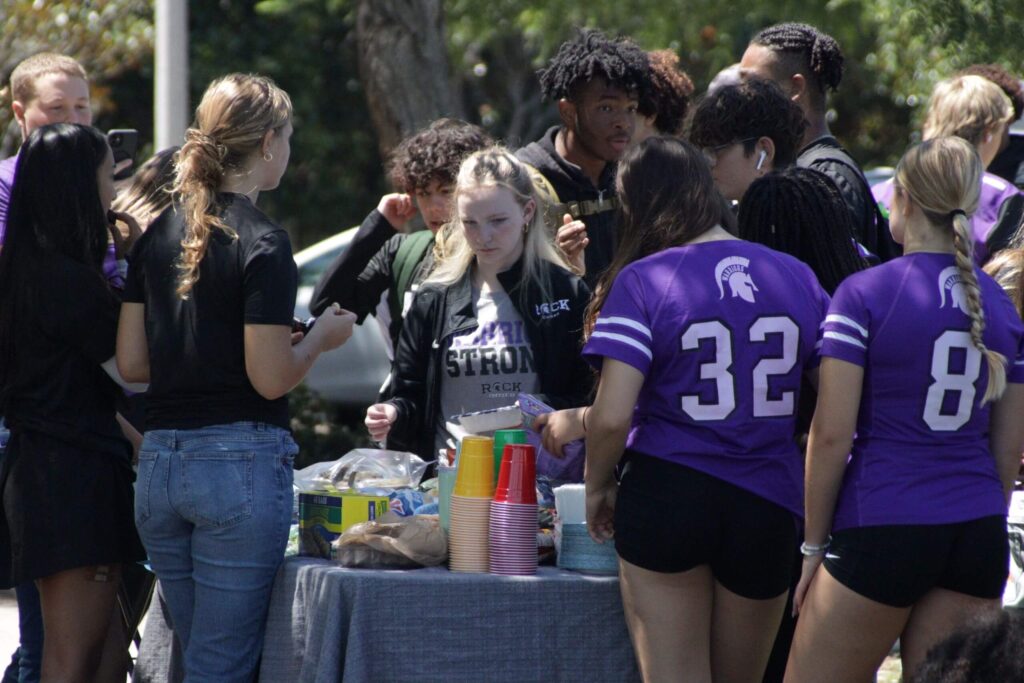
We believe that co-curricular enrichment is a necessary part of a well-rounded education. Elementary students have the opportunity to participate in school-wide drama production, and grades 4 -6 can play on one of our athletic teams that compete against other schools. In the middle school and high school there are a plethora of artistic opportunities and athletic teams. 90% of or 7 -12 grade students participate in athletics, or in a visual/performing arts activity. Learn more on our Student Life page.
Is there a uniform policy?
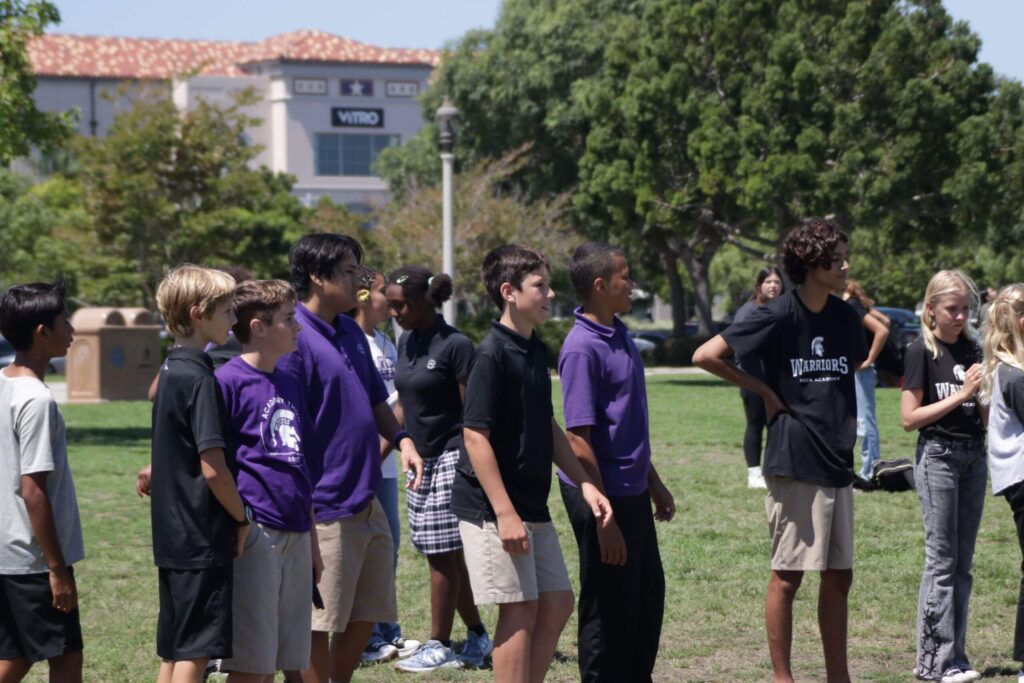
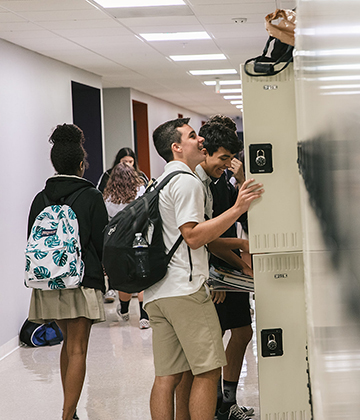
Yes. Students at the Rock Academy wear a comfortable uniform that consists of shorts, pants, skirts, polo shirts and jackets. Uniforms reduce clothing-related peer pressure, creates uniformity between socioeconomic classes, and tend to cost less than traditional youth clothing.